

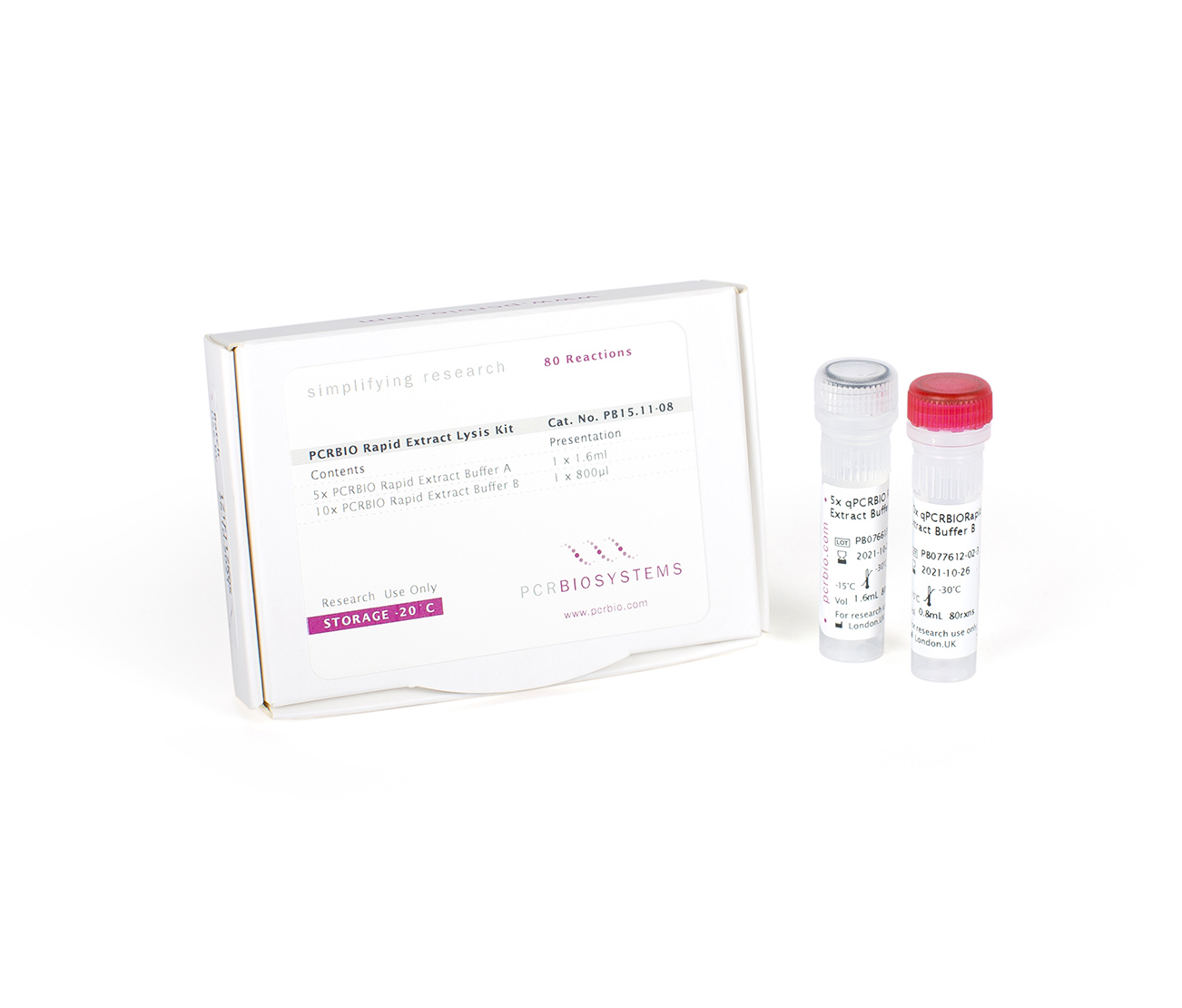
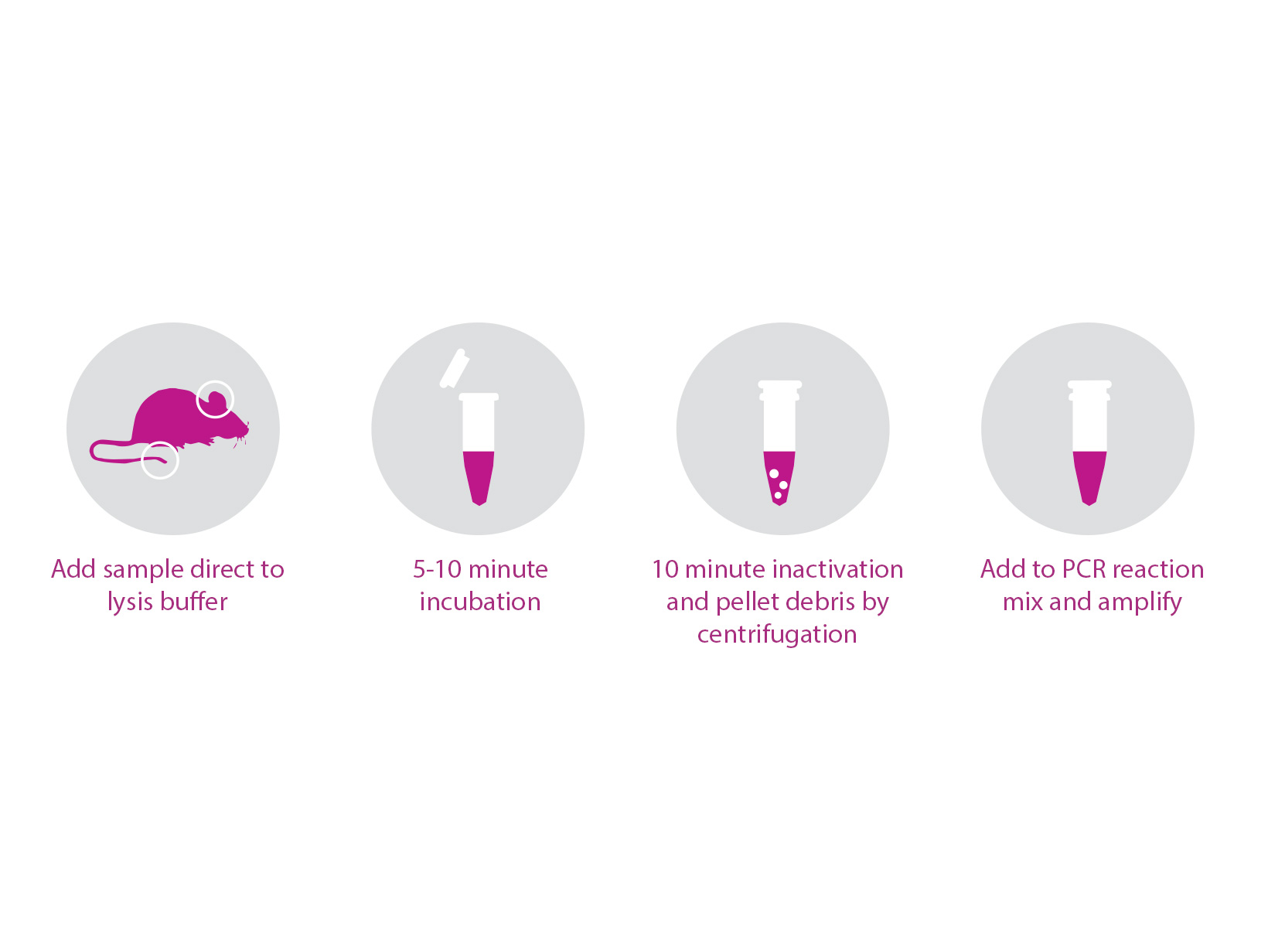
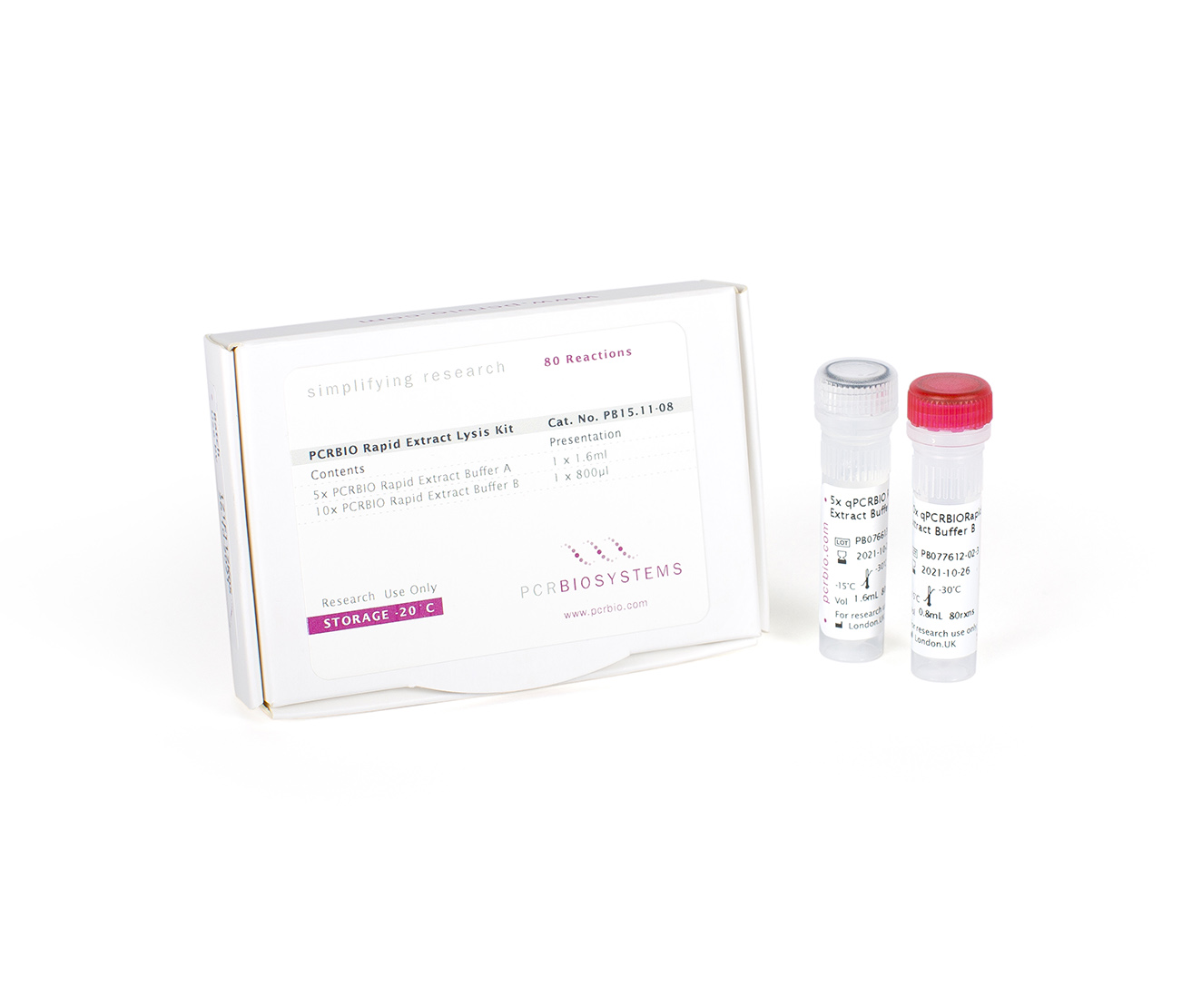
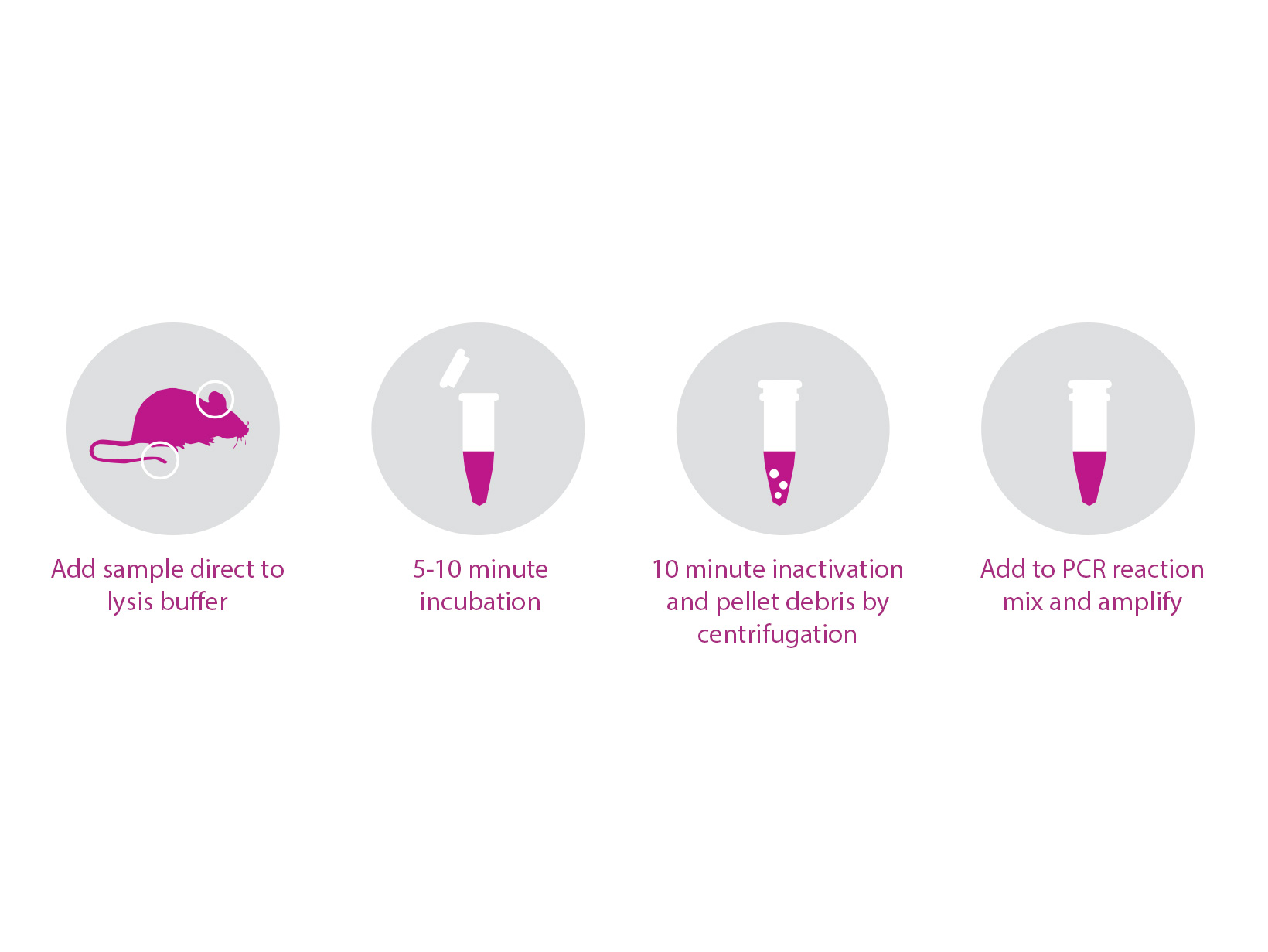
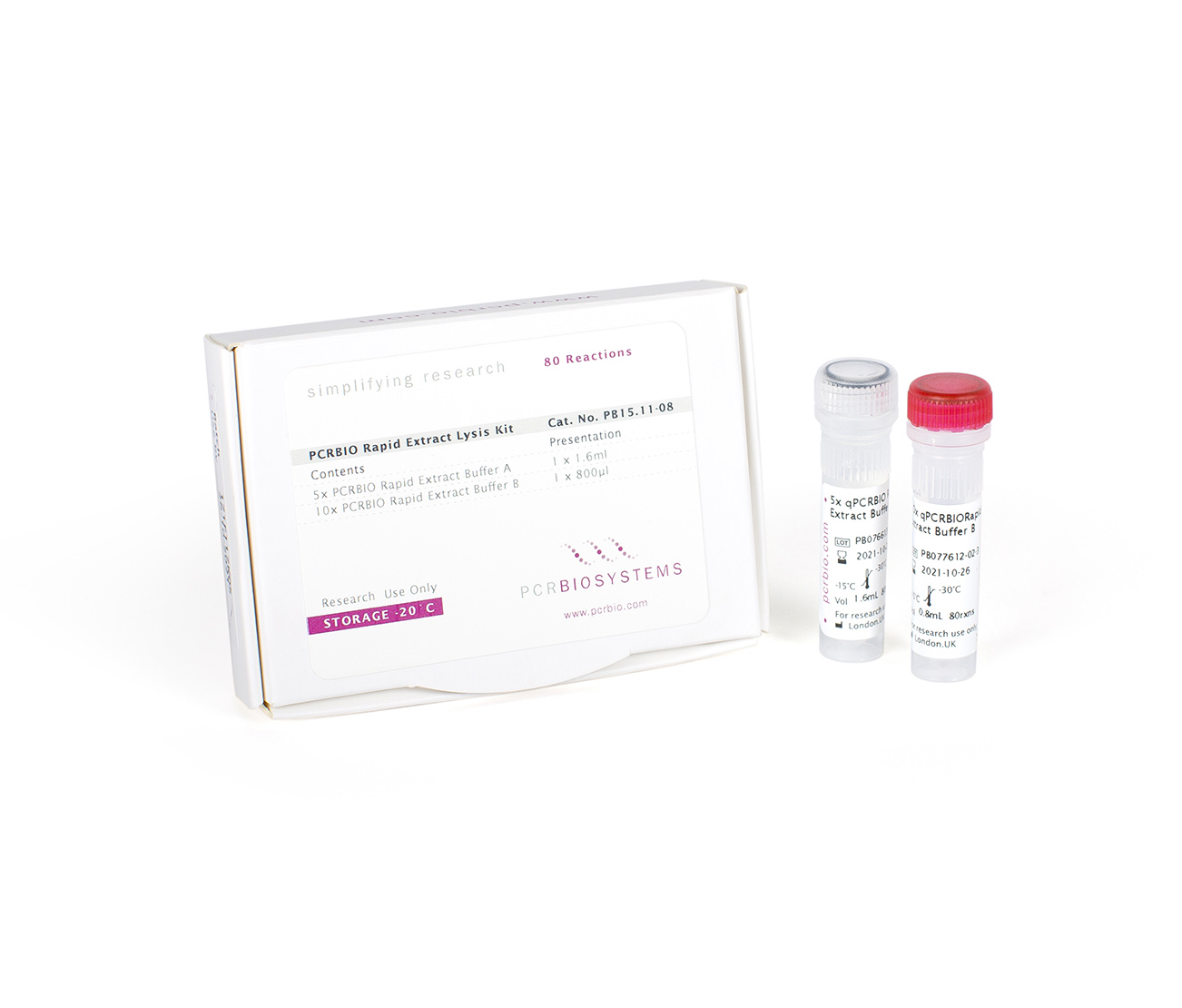
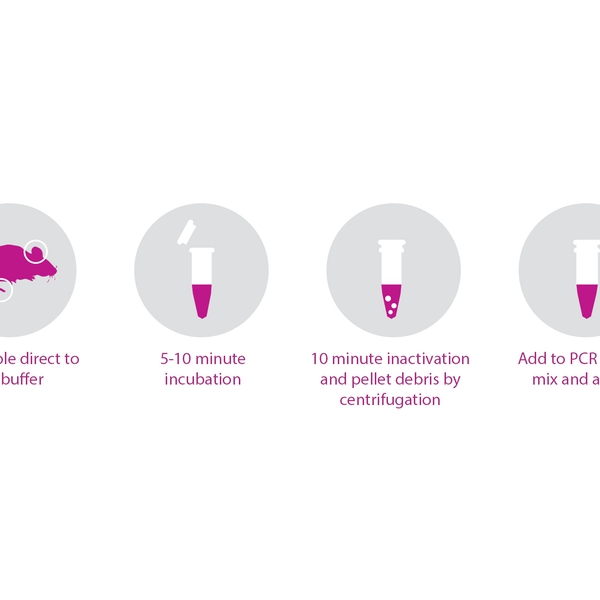
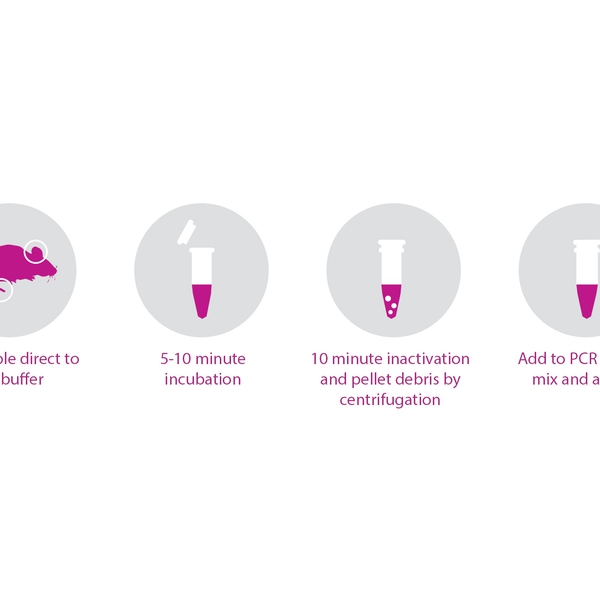
Features: Fast, convenient DNA extraction in a single tube; High-yield PCR-ready DNA production in just 15 minutes; Suitable for a wide variety of samples including rat tailcuts and earwax, animal tissue, hair follicles, oral swabs, mammalian blood, and FFPE tissue; Single-tube extraction minimizes contamination and sample loss; No hazardous chemicals or multiple washes required.
| CAT number | Product | Size | Price |
|---|---|---|---|
| PB15.11-08 | PCRBIO Rapid Extract Lysis Kit | 80 x 100 μL Extractions | Contact us |
| PB15.11-24 | PCRBIO Rapid Extract Lysis Kit | 240 x 100 μL Extractions | Contact us |
To view your quote, please log in or register with your quote reference.
Additional Information
The PCRBIO Rapid Extraction Kit provides a method for rapid DNA extraction in a convenient, easy-to-use format. The kit contains a lysis buffer system and protease that allows for the generation of PCR-ready DNA for use in subsequent PCR or qPCR reactions.
Eliminate the need for laborious and time-consuming DNA extraction methods with this quick and simple kit, optimized for a wide variety of sample types. The kit is particularly suitable for solid tissues such as mouse tails or ears, and can also be used with soft tissues, hair follicles, oral swab samples, mammalian blood, and FFPE tissue.
Application
- Genetic points
- Identifying transferred genes
- Knockout analysis
Specifications
PCRBIO Rapid Extract Lysis Kit
| Ingredient | 80 Extracts | 240 Extracts | ||
|---|---|---|---|---|
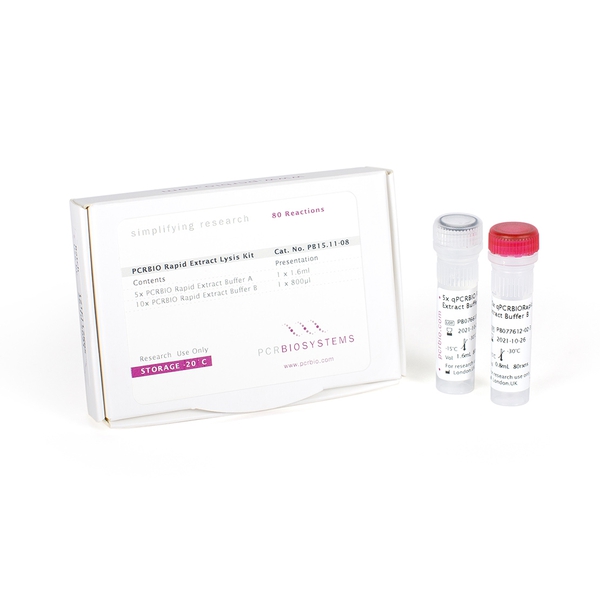
| 5x PCRBIO Rapid Extract Buffer A | 1 x 1.6 mL | 3 x 1.6 mL | ||
| 10x PCRBIO Rapid Extract Buffer B | 1 x 800 μL | 3 x 800 μL |
PCRBIO Rapid Extract Lysis Kit
| Ingredient | 80 Extracts | 240 Extracts | ||
|---|---|---|---|---|
| 5x PCRBIO Rapid Extract Buffer A | 1 x 1.6 mL | 3 x 1.6 mL | ||
| 10x PCRBIO Rapid Extract Buffer B | 1 x 800 μL | 3 x 800 μL |
Response information
| Reaction volume | Storage | |||
|---|---|---|---|---|
| 100 μL | Upon receipt, the products should be stored at a temperature between -30 and -20 °C. If stored properly, the product set will retain its full activity until the specified expiration date. The product set can also be stored at 4 °C for up to 1 month. |
Document
Product leaflet

User manual
Safety Data Sheet
Frequently Asked Questions (FAQs)
Our PCR mixtures work reliably with 10 or more sample copies per reaction, but no less than that. Keep the extracted DNA at the lowest possible volume and do not dilute further after protease inactivation. We recommend setting up the assay with more cells, and once conditions are established, it can be adjusted down from there.
Yes, it can be used to amplify DNA from bacterial koloni or bacterial cell lysates; however, it is not necessary to use this rapid extraction kit to perform routine koloni PCR. If you are working with bacterial koloni, use a sterile pipette to pick up a koloni and dissolve it in 50µl of PCR reaction. If working with liquid cultures, add 5µl of overnight culture to the final mixture. Follow the general protocol and increase the initial denaturation time to 10 minutes at 95°C.
For qPCR, it may be important to extract DNA with a PCRBIO rapid extraction kit to minimize background noise and control the amount of DNA added to the reaction.
We recommend storing the extracted DNA at -20°C for short periods, but for long-term storage, we recommend purifying the DNA and redissolving it in a standard buffer.
Yes, the PCRBIO rapid extraction kit can be used to prepare samples for qPCR. Use the PCRBIO rapid extraction kit to prepare the sample, then use that sample in the qPCR reaction according to the qPCR kit instructions.
The extracted DNA is therefore suitable for use with PCR kits from other manufacturers.
Protease is a highly active enzyme, and if it is not properly inactivated through the heat denaturation step, it can rapidly destroy the polymerase in the PCR step.
200 mM DTT should be added to the feathers and left to incubate overnight to break down the keratin.
5x PCRBIO Rapid Extract Buffer A (disruption buffer) and 10x PCRBIO Rapid Extract Buffer B (protease buffer).
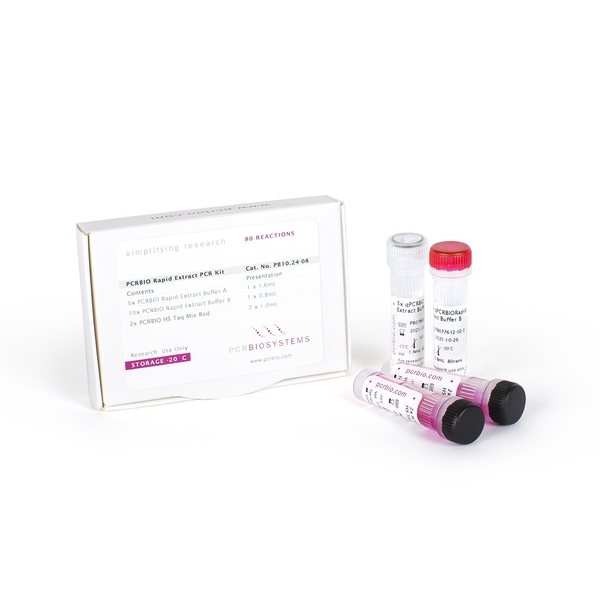
The PCRBIO rapid PCR kit has the same components as the PCRBIO rapid extraction kit plus PCRBIO HS Taq Mix Red for subsequent PCR amplification.
For formalin-fixed and paraffin-embedded (FFPE) tissue samples, we recommend using 1–2 mm² of a 10 µm cross-section. Using less than that may not yield enough DNA for PCR.
The PCRBIO rapid extraction kit has been tested with the following tissue types:
- Mammal cell culture
- Animal tissues from various species (Fish, lobster, mouse tail/ears, zebra fish, nematodes, kidneys, hair follicles)
- Insects such as Drosophila, mosquitoes, and beetles (legs, wings)
- Oral mucosa sample
- Gram-positive bacteria
- Mushrooms grow
- Stool sample
- FFPE
- Blood 1
- Fish scale
The following tissue types may require a washing step before starting the PCRBIO 2 rapid extraction protocol.
- Men 2,3 (pre-washed or digested with zymolase to obtain spheroblasts)
- Feather 4 (protocol adjustments required, see below)
- Sample 5 (requires a series of dilutions to remove inhibitors)
If you have a small amount of starter material, we recommend keeping the extracted DNA in the lowest possible volume and avoiding any dilution after protease inactivation.
1 Batubara, A. et al. 2016. Study of BMP15 gene polymorphism in Boer, Kacang and Boerka goats. Jurnal Ilmu Ternak Dan Veteriner 21 (4): 224-230. DOI: http://dx.doi.org/10.14334/jitv.v21i4.1636 (2016).
2 Inglis, PW et al. 2018. Rapid and inexpensive protocols for consistent high-quality DNA and RNA extraction from difficult plant and fungal samples for high-throughput SNP genotyping and sequencing analysis applications. PLOS ONE | https://doi.org/10.1371/journal.pone.0206085 October 18.
3 Suzuki, T. & Iwahashi, Y. 2013. Preparation of Saccharomyces cerevisiae RNA by digestion may lead to erroneous results. Appl Biochem Biotechnol 169 :1620–1632
DOI 10.1007/s12010-012-0051-8
4 Bello, N. et al . 2001. Extraction of genetic DNA from feathers. J Vet Diagn Invest 13 :162–164
5 Nantavisai, K. et al. 2007. Evaluation of the sensitivity of DNA extraction and PCR methods in the detection of Giardia duodenalisin in fecal samples. J. Clinical Microbiology . 45: 581–583 doi:10.1128/JCM.01823-06
Changes in the color of the supernatant may be due to pigments released from the tissue into the supernatant or changes in pH. Changes in the color of the supernatant do not necessarily affect the PCR reaction.
The PCRBIO rapid extraction kit can be used with human blood; however, components in blood may inhibit the PCR reaction. Therefore, it may be a good idea to perform a series of dilutions of the extracted DNA to find the optimal sample concentration for PCR amplification.
If amplification is not optimal, we recommend performing a DNA precipitation step using isopropanol/acetate before the PCR reaction.
Read more